
I get a version of this conversation on Instagram every week. Someone in Capitol Hill, Wallingford, or Columbia City sends me a screenshot of a Zillow listing in Northwest or View Ridge with a single message: “Wait. What?”
The math is real. The gap between what your money buys in Seattle proper and what it buys 25 miles north has widened in 2026, and a lot of Seattle families are doing the calculation and quietly making the move. Here’s the honest comparison from someone who watches both markets every day.
I’m Tessa with Poyner Homes here in Everett, and this is the post I send to friends-of-friends who are sitting in their Seattle living rooms wondering if life could feel a little less expensive without giving up everything they love.
Why People Are Moving From Seattle to Everett in 2026
The Seattle median home price is sitting north of $850,000 as of spring 2026. A starter home in a desirable neighborhood (Wallingford, Phinney, Columbia City, West Seattle) is rarely under a million, and a 3-bedroom family home is often $1.3M and up.
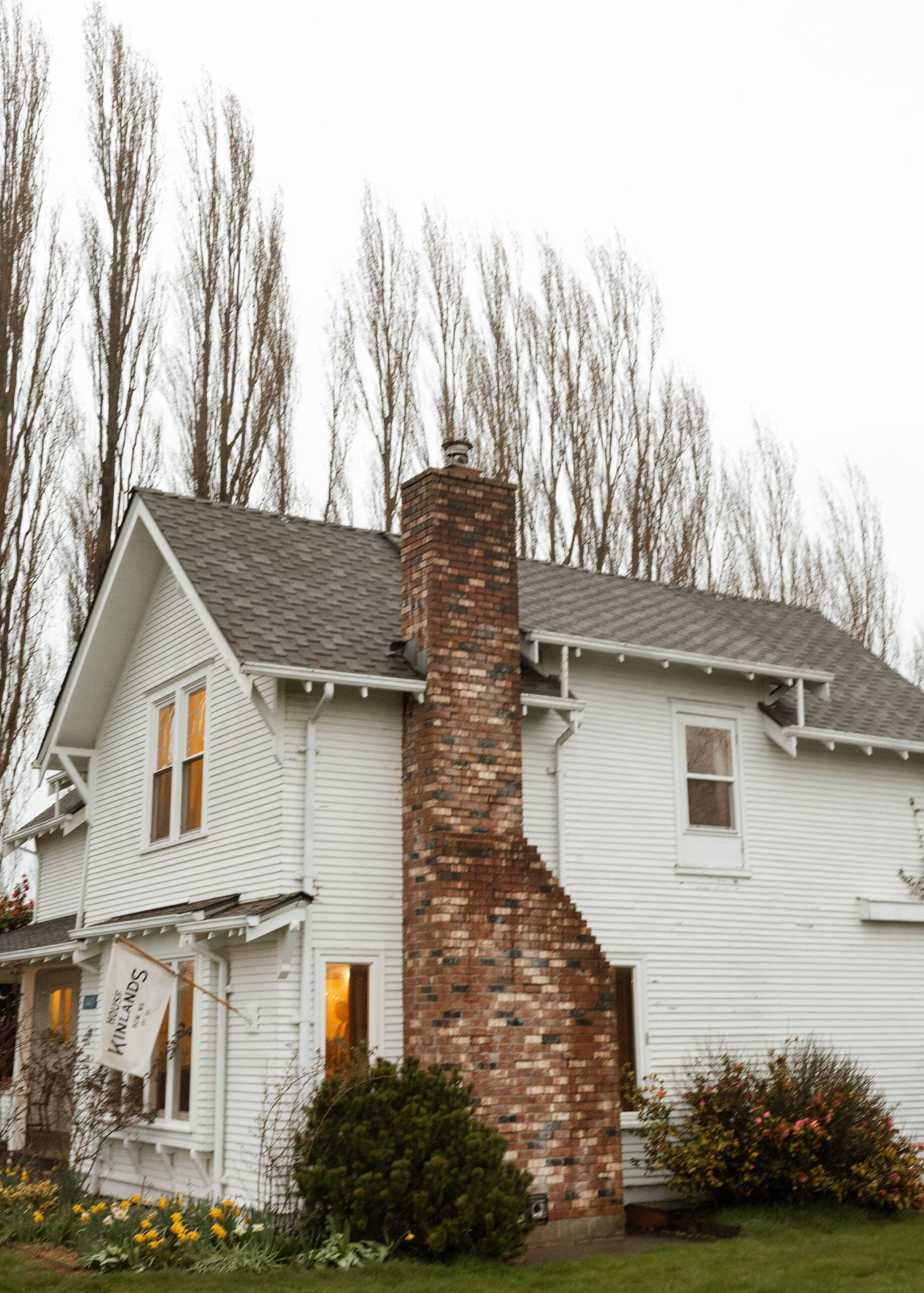
Everett’s median is in the mid-$500,000s, with the broader Snohomish County median around $735,000. The gap isn’t subtle. For roughly the same monthly payment, you’re moving from a 1,200-square-foot 2-bedroom in Seattle to a 2,400-square-foot 4-bedroom with a yard in Everett.
The buyers I work with on the Seattle-to-Everett move are mostly in three buckets. They’re growing families who hit the second-kid stage and realized the math doesn’t work without a yard. They’re remote-first professionals who don’t need to be in the office every day and want their money back. They’re empty nesters who want to downsize from a tall Seattle house but stay in the region, near grandkids in the broader Puget Sound area.
Whatever bucket you’re in, the conversation usually starts the same way: “We’re priced out. What’s possible?”
The Price Gap, in Real Numbers
Let’s run a comparable for $700,000.
In Seattle proper at $700,000, you’re typically looking at a 2-bedroom condo, a townhome with no yard, or a small single-family fixer in a less desirable pocket. Square footage usually 1,000 to 1,400. Garage if you’re lucky.
In Everett at $700,000, you’re looking at a 3 or 4 bedroom single-family home, often with a 2-car garage and a real yard. Square footage typically 1,800 to 2,400. Updated kitchens are common at this price. View potential in some pockets.
The same $700,000 buys roughly twice the square footage and a yard. That’s the headline.
At $500,000, the gap is even more striking. In Seattle, $500,000 doesn’t get you a single-family home in a livable pocket. In Everett, $500,000 buys you a real starter family home in Lowell or a renovated craftsman bungalow in north Everett.
The Seattle to Everett Commute, Honestly
This is the part everyone wants the truth on.
The Sounder train runs from Everett Station to King Street Station in Seattle in about an hour. Multiple morning and evening trains, comfortable seats, wifi, and the kind of commute where you can read or work or nap. If your office is downtown Seattle or near King Street Station, the Sounder is the answer.
Driving I-5 takes 35 minutes if you leave at 5:30 a.m., 50 to 60 minutes at 7 a.m., and 75+ minutes if you wait until 8. The reverse commute is similar.
Link Light Rail opened the Lynnwood station in 2024 and is continuing north. Many Everett residents now drive to Lynnwood (15 to 20 minutes) and hop on light rail. This skips the I-5 stretch into Seattle and gets you to most of the city without a parking headache.
If you’re a hybrid worker who’s in the office 2 or 3 days a week, the commute math works easily. If you’re in the office five days a week, you’ll want to think harder about which option fits your schedule.
Everett Neighborhoods that Feel like Seattle Pockets
If you’re trying to translate your Seattle neighborhood vibe into Everett, here’s the rough map.
If you love Ballard for the walkable streets, the marina vibes, and the mix of old craftsman and new construction, look at Bayside and downtown Everett. Same waterfront-adjacent character, same craftsman homes, smaller scale.
If you love Wallingford or Phinney for the tree-lined family streets, the bungalows, and the school-walk feel, look at Northwest Everett and Port Gardner. The architecture is almost identical, often older, often better-preserved.
If you love West Seattle for the views, the slower pace, and the bridge-life, look at View Ridge and Madison. Bluff-top views, mid-century homes, neighborhoods where you wave at neighbors.
If you love Columbia City or Beacon Hill for the family feel, the parks, and the up-and-coming energy, look at Silver Lake. The newer family pocket with parks, lake access, and a steady community feel.
If you love the older Seattle pockets like Mount Baker for the architectural history and the established feel, look at Boulevard Bluffs. The historic Craftsman heart of Everett, large lots, mature trees.
I can walk you through these comparisons in more detail. The streets matter. The pocket within the neighborhood matters even more.
What You Give Up
I’m going to be honest with you.
You give up walking-city density. Most Everett neighborhoods need a car to get groceries, and the late-night options are limited. If you’ve been in Capitol Hill living car-free for ten years, that adjustment is real.
You give up some of the food and music scene. There are good restaurants here and there’s a real arts community, but the scale isn’t Seattle’s. You’ll find yourself driving south once or twice a month for the things you can’t find in Everett.
You give up the cachet. Seattle has a name. Everett is starting to have one. Some of your Seattle friends will give you a slightly puzzled look when you tell them where you bought. They’ll get over it. Especially when they see your yard.
What You Gain
You gain space. Real space. A yard for a dog, a garage for projects, a primary suite that isn’t a glorified hallway.
You gain neighbors. The block-party kind. The wave-from-the-porch kind. The “I made too much soup, here’s a bowl” kind.
You gain margin. Lower mortgage payment, lower property tax bill, no more $14 cocktails because the bar nearby is genuinely affordable. Most Seattle transplants tell me at the 6-month mark that they’re saving money in ways they didn’t expect.
You gain a slower Saturday. Coffee at Narrative or South Fork Bakery or your new local spot, a walk along the marina, an afternoon project in the garage, dinner at home with the windows open. There’s a softness to weekends here.
You gain time. The hours you used to spend looking for parking, sitting in cross-town traffic, or working a second job to afford the mortgage. They come back.
The Relocation Timeline that Doesn’t Burn You Out
Here’s the realistic shape of a Seattle-to-Everett move.
Months 1 to 3: Explore. Visit on weekends, drive neighborhoods, get pre-approved with a local lender. Don’t list your Seattle home yet.
Months 3 to 4: Define your shortlist. Two or three Everett neighborhoods, must-have features, budget range. Start watching specific listings as they come on the market.
Months 4 to 6: Sell and buy. We strategize the timing together. Many of my Seattle-to-Everett buyers do a contingent purchase or a leaseback to avoid moving twice.
Month 6 onward: Settle in. Get to know your coffee shop. Find your pediatrician, your hairstylist, your trail.
If you’re remote-friendly and not bound to a Seattle commute, this timeline can compress. If you have kids in school, plan around the school calendar.
Let’s Talk About What’s Possible
If you’ve been doing the math in your head for the last six months and you’re ready to put real numbers on it, that’s exactly the conversation I love having. You don’t have to be ready to buy tomorrow. You just have to be curious enough to start.
Send me a DM with the Seattle Zillow screenshot you’ve been scrolling and your monthly payment. I’ll send back a few real Everett homes in the same payment range, plus an honest read on whether the move makes sense for your life right now.
Sometimes it doesn’t, and I’ll tell you that too. But for a lot of Seattle families in 2026, this is the move that gives them their life back.